Showing posts with label codicology. Show all posts

Tuesday, April 1, 2014

Monday, February 17, 2014

What was happening in Indian publishing houses at the beginning of the 20th c.?

How is your experience with early publishing houses in India? How many books were published each year? Please read the rest at my new blog, here.

Friday, October 25, 2013

Read more books, in order not to be exploited: an interview with Camillo A. Formigatti

Camillo Formigatti works at the Cambridge Sanskrit Manuscript Project and is the author of many wonderful virtual catalogue sheets you can read directly online here. I met him only in 2009, while working at the first Coffee Break Conference, and now I wonder how I survived before without his acumen in the analysis of manuscripts as "things" and not (only) as carrier of a meaning

Friday, July 26, 2013

How to be an excellent Tibetologist and land in a Marie Curie Fellowship: an Interview with Michela Clemente

I met Michela Clemente because we both studied at the faculty of Oriental Studies at "La Sapienza" in Rome and most of all because we studied together Tibetan at the IsIAO. She wrote her MA thesis on a 17th century religious master, Kun spangs pa Chos kyi rin chen, by translating his life-story, which was an uncommon type of biography and, to her knowledge, the only preserved copy of this text. The inner typology is so far the less-studied and least known among Tibetan biographies. She is thus the first scholar who translated a Tibetan “inner biography” into a European language (for further details on this genre of biographies and on Michela’s work in particular, see Clemente 2008).
Then, she wrote her PhD thesis on lHa btsun Rin chen rnam rgyal (1473-1557) a master who had a leading role in Tibetan printing history. Beside her interest for the contents of the works she has been dealing with, and for the genre of biographies in general, she has also been researching on their form, i.e., on Tibetan xylographies. These are woodblock prints and have been used since the beginning of the 15th Century in Tibet. Against in the case of modern printing with movable characters, the whole page was engraved in wood and then used as a stamp. Michela has been outlining some key elements for a philology of Tibetan xylographies (printing school, colophons, etc.). You can find, e.g., an abstract of her contribution on this topic to the first Coffee Break Conference here; the full article has been published on RSO 2011. She is now in Cambridge with a Marie Curie fellowship.

EF: What is your current project about?

MC: My current project is about Tibetan printings. It is entitled Tibetan Book Evolution and Technology. This is correlated to an international project entitled Transforming Technologies and Buddhist Book Culture: the Introduction of Printing and Digital Text Reproduction in Tibetan Societies, organized by the University of Cambridge (MIASU) in collaboration with the British Library and funded by the British Arts and Humanities Research Council (AHRC), which started in 2010 and in which I am involved. My project will study extant early Tibetan prints from the South Western area, where the first printing houses of Tibet were set up, in order to understand the introduction of xylography as a complex process involving technical, economic, political and religious factors. The project will focus on the 15th–early 16th century xylographs from various libraries in the UK (Cambridge University Library, Bodleian Library, British Library, Liverpool Library) as well as other prints from the National Archives of Kathmandu, numerous libraries in Tibet and from the Tucci Tibetan Collection of the IsIAO Library in Rome. By focusing on the study of these early prints a great deal of codicological information will be produced. This will be used to supplement the historical information from the texts and provide the starting point for a new method of identification of early prints based on book features. I will examine the texts according to codicological standards and in co-operation with experts from different disciplines thus obtaining the fullest understanding of all aspects of the texts through:

  1. 1) materials analysis [paper, ink, pigments];
  2. 2) the style of the edition [front page, layout, ductus, orthographic peculiarities, woodcut representations];
  3. 3) book cover typology (if present); 
  4. 4) the study of the colophon.

EF: Do you interact with colleagues working on similar topics but with South Asian and/or Western materials?

MC: I am interacting with colleagues at the Faculty of Asian and Middle Eastern Studies in Cambridge, who are working on a AHRC project which focuses on Sanskrit Manuscripts preserved at the Cambridge University Library. Within the AHRC project on Tibetan book, we are also organizing a workshop on printing as an agent of change in Tibet and beyond, which will involve experts of Japanese, Chinese and Indian prints as well.

EF: Which topics do you envision as the more urgent priorities in your field of study? What would you recommend as a topic for, e.g., a young graduate student looking for a theme for his/her PhD thesis?

MC: Tibetan culture is plenty of topics to deepen and I can’t say which one has the highest priority. Furthermore, I think that each young student should choose something fascinating to him/her. Passion is what leads a scholar to continue his studies despite difficulties. It is not easy to carry on research, especially in Italy, and especially in this field. There are numerous texts that have not been translated yet and that are now available. There are collaborative projects that are investigating different facets of Tibetan culture. If students who are interested in Tibetan culture would like to contact me, they can write me at this address.

EF: You managed to get a prestigious scholarship. Apart from your expertise on this field, what was the key of this success? What would you recommend to colleagues and readers?

MC: It is necessary to find the right institution which will host you. It must have an experienced and well-trained staff. The credibility of the institution is extremely relevant. The presentation of the project is also really important. The topic of the project must be comprehensible for anybody and it should be presented in a fascinating way. Do not write the application as a scientific article. Try to write as simple as possible. Do not use Tibetan or Sanskrit terms. People that evaluate these applications are researchers of all disciplines and also managers, publicists, and so on. Graphs and charts are appreciated as well as pictures. Take into consideration outreach activities for a wider audience. It is important that the project is useful not only to deepen one or more aspects of your field, but also for the community. Before submitting the application, ask someone who is not a specialist in your field to read it. If it is comprehensible to him/her, then you can submit it. You also need someone who help you with the preparation of the application. Many faculties have people who do this as part of their job. Your curriculum is another important part of the application, especially publications. If you manage to create a collaborative project, it would be something particularly interesting. Try to start the preparation of the application some months before the deadline or you will be forced to do it as a full-time job! Good luck!

EF: More in general, what would you recommend to prospective scholars/younger colleagues?

MC: I would recommend graduate students to publish as soon as possible and as much as possible, to participate in conferences, workshops etc, to interact with colleagues and scholars across the world, to collaborate to any kind of initiative or project of universities, cultural associations and institutions. 

Wednesday, April 10, 2013

Do you happen to be in Rome? A conference and workshop by Philipp Maas

Thursday the 11th of April is a busy day for Indologists. Apart from the Buddhist Manuscript Seminar in Cambridge, they should be able to be in Rome for a full-day with Dr. Philipp Maas. Philipp has esited the first pāda of the Pātañjala Yogaśāstra (i.e., the text formerly distinguished into Yogasūtra and Yogabhāṣya, but which probably came into being as such). He is also a talented reader of manuscript and has, among other things, written a fundamental article on the application of computer-aided stemmatics to text criticism.
On 11 am he will deliver a lecture Once again on the authorship of the Pātanjala-Yogaśāstra.
Then, at 4 pm he will lead a workshop on text criticism using as an example The classification of yogis and their spiritual progress in Pātanjala Yogaśāstra 3.51 and 2.27. The nice thing about the seminar is that he will present the collation of various manuscripts and discuss about which reading needs to be chosen.

If you manage to attend the lecture/workshop or to know Philipp Maas' work, don't forget to leave your comment here.

Tuesday, March 5, 2013

Buddhist Manuscript Culture: Textuality and Materiality

 The team of the AHRC-funded "Sanskrit Manuscripts Project, Cambridge" (i.e., Dr. Vincenzo Vergiani, Dr. Daniele Cuneo and Dr. Camillo Formigatti) has informed me about their first project workshop, which bears the following title:

Buddhist Manuscript Culture: Textuality and Materiality

The workshop will be held at the Faculty of Asian and Middle Eastern Studies, Cambridge, on 12th-13th April 2013. All are welcome.

Further details and a provisional programme can be found at: http://sanskrit.lib.cam.ac.uk/buddhist-manuscript-culture-textuality-and-materiality

The workshop has extremely interesting speakers, focusing on different points of view on manuscriptology, e.g., looking at manuscripts as material objects (Hildegard Diemberger and Michela Clemente, Camillo Formigatti, Imre Galambos…) or as vehicles of a text (Cristina Scherrer-Schaub, Harunaga Isaacson, Francesco Sferra, Péter-Dániel Szántó, Vincent Tournier, Gergely Hidas, Michael Hahn, Martin Straube, Margaret Cone, Lata Deokar…).
What interests you more? And why?

12th April

9.30–10.15 Keynote speech: Cristina Scherrer-Schaub
The poetic of the page to beat time on the template. Inquiry into a form adopted in Indian/Indic manuscripts outside India

Codicology and History of the Book

10.15–11.00 Martin Delhey (University of Hamburg)
Once again on the problem of provenance of North-East Indian and Nepalese Buddhist manuscripts: with special reference to 12th century manuscripts from the Indian monastery Vikramaśīla
11.00–11.15 Coffee Break
11.15–12.00 Harunaga Isaacson (University of Hamburg)
Scattered leaves: on some Buddhist Tantric prakīrṇapattrāṇi in Cambridge University Library [provisional title]
12.–12.45 Hildegard Diemberger and Michela Clemente
(University of Cambridge)
Tibetan book printing: tradition and technology
12.45–13.30 Imre Galambos (University of Cambridge)
From paper to palm leaves: Medieval Chinese manuscripts in the pothī format
13.30–15.00 Lunch Break
15.00–15.45 Camillo Formigatti (University of Cambridge)
Buddhist Nepalese manuscripts in the Cambridge University Library collections: towards a typological classification [provisional title]
15.45–16.30 Francesco Sferra (University of Naples “L’Orientale”)
Apropos of Some Buddhist Tantric Manuscripts: Add. 1108, Add. 1708.1, Or. 158
16.30–16.45 Tea Break
16.45–17.30 Vincent Tournier
Protective verses for travellers: notes on a leather fragment of the *Diśāsauvastika-gāthā*s recovered from the Bāmiyān region
17.30–18.15 Arlo Griffith (EFEO Jakarta)
The transmission of Buddhist scriptures to ancient Indonesia as witnessed by manuscripts preserved on Bali and inscriptions discovered throughout the archipelago

13th April

Philology and Textual Transmission

10.00–10.45 Martin Straube (University of Halle-Wittenberg)
The textual transmission of Kṣemendra’s Bodhisattvāvadānakalpalatā
10.45–11.30 Margaret Cone (University of Cambridge)
[title tba]
11.30–11.45 Coffee Break
11.45–12.15 Michael Hahn (University of Marburg)
Editorial problems of Śivasvāmin’s Kapphiṇābhyudaya
12.15–13.00 Lata Deokar
Subhūticandra’s Amarakośaṭīkā [provisional title]
13.00–15.00 Lunch Break
15.00–15.45 Peter Szanto (University of Oxford)
Revisiting lists of Tantric Buddhist trespasses
15.45–16.30 Gergely Hidas
A new look at the Mahāśītavatī
17.00–17.45 Tea Break
17.45–18.30 Round table

Friday, January 11, 2013

Kumārila's commentators

Kumārila's Ślokavārttika has been commented several times. The main three commentators are
  • Uṃveka Bhaṭṭa
  • Sucarita Miśra
  • Pārthasāsathi Miśra
DATE
Uṃveka was possibly a direct disciple of Kumārila and is surely the most ancient commentator. As for Sucarita and Pārthasārathi, they surely lived several centuries thereafter. Their relative chronology is under discussion. The two share a lot which is distinctive to them and not borrowed from Uṃveka. Personally (see an article by me on Kumārila's commentators published on Sambhāṣā in 2008) I am inclined to think that Sucarita is the source of Pārthasārathi.

PHILOSOPHICAL VALUE
Uṃveka is original and interesting in approach and seems to be the most philosophically interesting author (which also means that he might not be completely reliable as for the interpretation of Kumārila's thought, as shown by John Taber in regard to the thesis of svataḥ prāmāṇya). The edition of Uṃveka has the text of Kumārila reproduced on the top, but the text has been added by the editor and needs not be exactly the same which Uṃveka had before his eyes.

This last remark applies even more to Sucarita. In his case one often has the feeling (at least, I do) that he might have had a different text before his eyes. I enjoy reading Sucarita, since he seems to me to offer a good balance between philosophical acumen and adherence to the text.

Pārthasārathi is the most useful commentator as for understanding Kumārila's text in itself but one hardly finds any new idea elaborated by him (and not already traceable in Sucarita).

EXTENSION OF THE COMMENTARY
Pārthasārathi's commentary is the only one which has been completely published. Sucarita's commentary is possibly complete (Taisei Shida is currently editing the unedited portions), but has only been partially published (see the etext of the available part here). Uṃveka's commentary is, so far, incomplete.
Thus we have:
—Uṃveka covering from the beginning to the sphoṭa section (i.e., covering MS 1.1.1, MS 1.1.2, MS 1.1.3, MS 1.1.4, and the following sections out of MS 1.1.5: vṛttikāragrantha, nirālambanavāda, śūnyavāda, anumāna, śabda, upamāna, arthāpatti, abhāva, citrākṣepa-sambandhākṣepa, sphoṭavāda).
—Sucarita covering from the beginning to almost the end of the citrākṣepa section.
—Pārthasārathi covering the whole Ślokavārttika.

(this post has been prompted by a question by Sudipta Munsi.)

Which one do you know and use?

Thursday, January 3, 2013

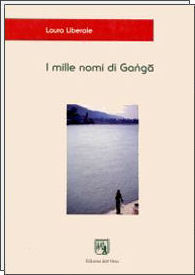
The names of Gaṅgā: a critical edition of a nāmastotra

I just read "The Thousands name of Gaṅgā" (I mille nomi di Gaṅgā) by Laura Liberale. The first part of the book recounts the myths about Gaṅgā, whereas the second is an Italian translation of the Gaṅgāsahasranāmastotra ('the hymn of the thousands names of the Gaṅgā', a list of thousand names of Gaṅgā, in alphabetic order and with no further notation) of the Skandapurāṇa. The translation is followed by an appendix reporting the Sanskrit text of the 1908-9 edition  of the Skandapurāṇa, together with variants found in twenty manuscripts.
The author notes:
  1. 1) that H.T. Bakker (working on the critical edition of "the most ancient edition of the Skandapurāṇa", dated "to the VIII or even VI c.") told her that the Gaṅgāsahasranāmastotra is not present in this "original" version (p. 195).
  2. 2) that, "therefore", "this stotra does not seem to precede the XIII-XIV c." (p. 195). 

I am not sure that 2) follows from 1), although the author might have additional reasons she does not mention here, i.e., the chronology of nāmastotras (hymns listing names) in general. But, if so, the absence of the Gaṅgāsahasranāmastotra from the ancient version of the Skandapurāṇa edited in Groningen does not seem to add much.

  1. 3) Next, she notes that the text has been handed down "with a extraordinary honogeneity of sources" (i.e., with little variants). 

However, the twenty manuscripts are all manuscripts of the Gaṅgāsahasranāmastotra, separated from the Skandapurāṇa, they are all written on paper and in Devanāgarī. Moreover, 12 out of 20 come from the same library (Indira Gandhi National Centre), 2 come from Poona (Bhandarkar Oriental Research Institute), 2 from Trivandrum (Oriental Research Institute), 1 from Kerala (Oriental Research Institute and Manuscripts Library) and 2 from the on-line archives of the university of Pennsylvania. I wonder whether the uniformity depends only on the relatively recent age of the text (do you know of recent religious texts with many variants?) or on the particular manuscripts examined, which might all be related. Unfortunately, the author does not attempt a stemma codicum, nor does she explain how representative is the number of manuscripts examined, if compared to the total amount of manuscripts of the same text.

  1. 4) The author writes (p. 12) that she has found and examined all manuscripts. 

Why are the data (such as number of pages, lines per page…) missing in the case of the manuscripts from the BORI and from Trivandrum?

This being said, the section about manuscript is rightly called an "appendix" and readers immediately understand that the author cares much more for the content of the Gaṅgāsahasranāmastotra and for its focus on the feminine aspect of the Divine.

 A couple of general questions:
—What do you think of the possibility of critical editions of nāmastotras?
—Does it make sense to collect variants, if one is not interested in a complete recensio, nor in a genealogy of manuscripts? Please remember that life is short and the time spent in doing X is time one is not dedicating to Y.

On the need of priorities, see this post. For my review of this book on Amazon.it. click here.

Sunday, December 16, 2012

Should we emend Sanskrit metri causa?

Patrick Olivelle, in his 1998 article on the Journal of Indian Philosophy (Unfaithful transmitters), suggests that, in general, one should be more than cautious in emending the received text. This applies, he maintains, also to emendations metri causa (because of faulty metre). Why?

1. As explained by Max Müller (1879: lxxii, quoted in Olivelle, p. 179): "The metrical emendations that suggest themselves are generally so easy and so obvious that, for that very reason, we should hesitate before correcting what native scholars would have corrected long ago, if they had thought there was any real necessity for correction". And, Olivelle could add, if generations of paṇḍits, much more learned than we are, did not emend, they must have had a good reason for not doing it.

2. Several metrical faults can be explained away. Olivelle refers to Alsdorf's (1950, mentioned at pp. 179--180) attempt to explain faults in metre through non application of sandhi or through prakrit pronounciations of bhavati, iti, iva, etc.

As for 1., please read Michael's comment on the distinction between dead and living traditions here (would Olivelle/Max Müller say the same about a codex unicus reporting an odd spell?).

As for 2., as much as it can sound convincing in the case of Epics and of other genres, I cannot really imagine Jayanta or any other philosophical poet pronouncing a word in prakrit amid a verse in his Nyāyamañjarī. And I recollect having imagined emendations in the text of Vāmanadatta's Saṃvitprakāśa, whenever the metre was faulty.

What do you think? What did you do in your actual praxis?


Friday, August 24, 2012

How to start with a new Sanskrit manuscript?


Suppose you have in front of you a manuscript in a foreign script (although you know the language) and you do not have a copy of the text in a known script. How do you start your journey in the manuscript?

After three tough days, I could finally decrypt some words in a manuscript written in some form of grantha I was not acquainted with (possibly halfway between grantha-tamil and grantha-malayalam). It costed me time and energy and I wonder whether someone ever wrote an easy-to-follow guide to lead one's first steps within a manuscript. Do you know of any such guide? And what do you do first in similar situations? I will start sharing my (limited) experience.

  1. 1. Bibliographical resources: I am very grateful to R. Grünendahl for his South Indian Scripts in Sanskrit Manuscripts and Prints (Grantha Tamil, Malayalam, Telegu, Kannada, Nandinagari), with great tables. Unfortunately, the fonts used (the book was published in 2001) are the ones now common in print and are usually far away from the characters one finds in manuscripts. More important, there is no indication about the ductus of a graphe, i.e., one does not learn where does a scribe start while writing, e.g., a ka. Consequently, one is not in the position to foresee possible variations in the final result.
  2. 2. Human resources: This is possibly the most important element. When I first started reading mālāyālam, a friend, Pratibhā Chelaparampath, taught me the script the way she learnt it as a child. Manuscripts are quite different, but still this helped me a lot in getting an idea of the ductus of each letter. Besides, more expert colleagues have often made my work on manuscript much easier and enjoyable by sharing their charts of characters with me or even just by looking at the manuscript with me (I am particularly grateful to Alessandro Graheli for a great insight on the manuscript I am currently working on).
  3. 3. Inference: Marks which are constantly repeated in a South Indian manuscript are likely to be vowel-marks. Once you have individuated some plausible candidates, you can check whether they come before or after any given "consonant". If the former, they might indicate an 'e' or an 'o'. A further evidence is acquired if one encounters them twice before a consonants (thus indicating an 'ai'). A "ca" ('and') should also be very common. Pauses, such as the ones marked by daṇḍas are useful to start a new inquiry in case the preceding one has yield no result…
  4. 4. Psychology: Don't despaire. I try to remember that there is always a moment when I am tempted to give up, but that I always overcome it.

Tuesday, June 12, 2012

The 2012 Coffee Break Conference

The Study of Asia – between Antiquity and Modernity

Program of the Third Coffee Break Conference

University of Cagliari, 13–16 June 2012
Aula verde – Cittadella dei Musei

13 June, Wednesday
Opening of the Third Coffee Break Conference
• 08.30–09.00 Greetings
Kings of the Wild: Hints of Unorthodox Sovereignty in Ancient, Medieval, and Modern India
• 09.00–09.20 D. Cinellu Chairman’s Introduction
• 09.20–10.10 Danila Cinellu Kingship and “contra-kings”. Searching for some harmony in the Frazer-Hocartian debate
• 10.10–11.00 Moreno Dore The Vrātyakaṇḍa: a kind of Jaina asceticism in a Vedic garb?
• 11.00–11.20 Coffee Break
• 11.20–12.10 Elena Mucciarelli Goddesses and Fertility in the Vedic Period: looking for stratifications
• 12.10–13.00 Cristina Bignami Viṣṇuvardhana, the royal propaganda and the Goddess
• 13.00–14.00 Lunch Break
• 14.00–14.50 Ewa Dębicka-Borek Can the worship of Narasiṃha-mantra serve as a converting ceremony?
• 14.00–14.50 Arik Moran Pahari bhakti: towards a history of devotional Vaishnavism in the West Himalayas

An Indian old man advised a Western researcher: ask while you are walking. Discussion on Development Studies Methodologies• 15.40–16.00 B. Benedetti · P. Cagna Chairman’s Introduction
• 16.00–16.20 Coffee Break
• 16.20–17.10 Barbara Benedetti · Barbara D’Ippolito Conversation between boundaries: self-critical
reflections on field work
• 17.10–18.00 Valentina Prosperi Asking and Observing along the Way, Researching Migrant Informal Construction Workers in India


14 June, Thursday
Cybernetic Sources: The Historical Sciences in the Age of Digitization• 08.30–08.50 Mark Schneider Instead of an introduction: Some remarks on digitization with East-Asian writing
systems
• 08.50–09.40 Camillo A. Formigatti TEIandcatalogingSanskritmanuscripts
• 09.40–10.45 Vanja Štefanec Natural language processing in philological research
• 10.45–11.05 Coffee Break – Presentation of the CAESAR project by Vanja Štefanec


Anthropological interpretations: spaces and characters in the current Asian context
• 11.05–11.25 G. Tabacco Chairman’s Introduction
• 11.25–12.15 Gabriele de Seta The Noise Connection: Experimental Music in China as a Networked Subculture
• 12.15–13.05 Sehat Ihsan Shadiqin Adat in Gayonese Discourse and Practice: The Development of Ethnic Identity in Indonesia
• 13.05–13.55 Giacomo Tabacco Speaking of Success: Overwork, Malaises and Dreams among a Group of Javanese Factory Laborers
• 13.55–14.55 Lunch Break

Contemporary Issues in South Asian Religions
• 14.55–15.15 S. Bindi Chairman’s Introduction
• 15.15–16.05 Daniela Bevilacqua Do not ask about caste. If you love God, you belong to God
• 16.05–16.55 Serena Bindi “Nowadays Gods do not always help us”. Belief, skepticism and explanations for ritual’s failures in Garhwal
• 16.55–17.15 Coffee Break
• 17.15–18.05 Massimo Bon Pakistan, Secularism and Religion: a Semantic Dilemma

15 June, Friday
Translation Techniques in the Asiatic Cultures• 09.00–09.30 A. Keidan Chairman’s Introduction
• 09.30–10.20 Fanny Meunier Study of the different Tocharian versions of the Sanskrit Udānavarga: translation vs. adaptation?
• 10.20–11.10 Chiara Barbati Christian Middle Iranian Translations within the Syriac Tradition
• 11.10–11.40 Coffee Break
• 11.40–12.30 Daniele Cuneo Translation and/or/as Adaptation? The Tamil “version” of Daṇḍin’s Kāvyalakṣaṇa
• 12.30–13.20 Samira Nikooeeyan An Analysis of the Translation of Metaphors in Shakespeare’s Translated Sonnets

On the rationale of a coffee break conference, see this post. For some comments after the second CBC, see this post. This one is a post discussing ideas for future Coffee Break Conferences (ideas, speakers and organisers are any time welcome!). For further information on the Coffee Break Conferences, see here.

Saturday, May 14, 2011

Methodology of critical editions

An anonymous, yet intriguing reader made me reflect in general about the methodology of critical editions. Let me first point out that I am not an expert and that this post mainly aims at raising a discussion (or at least some thoughts in its readers).

The first point is, in my opinion, having clear the purpose of what one is doing. Does one want to reconstruct the author's text? The one commented upon by its main commentator? The one copied by a well-known intellectual?… The question amounts to a basic dichomoty:
  • 1. Reconstruction of the Ur-text (with Urtext understood lato sensu, as every possible stage of the text, provided that it is linked to a precise person, time and place).
  • 2. Reconstruction of the Tradition.

In the second case, it will make sense to list as many variants as possible, virtually also all variants. They will help one to throw light on, e.g., the fortune of the text, the kind of copysts who copied it, their geographical and social origin, etc.
In the first case, by contrast, I would suggest not to list variants which do not make sense and/or which are due to obvious misreadings.
For instance, in the first case I would not list variants such as sakti instead of śakti, kamma instead of karma, or even na instead of sa if the context is clear and they are very similar in the manuscript. In the second case, it would be interesting to note that the text had been copied in a region where palatal ś were pronounced as s, by copysts who were not extremely accurate in reproducing consonant clusters and possibly in a telegu (or similar) script.

If, as often the case, one wants to do both, one runs the risk of producing a critical apparatus so full of variants, that it will be neglected altogether by readers, etc. Hence, I would add a couple of additional suggestions:
—If the text has never been published before, I would avoid producing an unreadable edition, i.e., one in which there is only one (or 2, 3, 4) line(s) per page and the rest of the page is occupied by variants.
—Many, possibly most, insignificant variants could be included in the manuscript's description. One could explain there that the copyst of X tends to duplicate t-s or tends to confuse voiced and unvoiced stops, etc.
—If the number of insignificant variants is enormous, but the manuscript(s) one is working on is very important for the reconstruction of, e.g., the cultural history of a certain area, one could consider producing a separate diplomatic edition.
—I would always produce a translation of the text I have edited, so that readers can better see the rationale of my editiorial choices.
As for conjectural emendations, as already explained, I tend to think that the received text is "innocent until proven guilty". I would not emend it if it makes sense as it is and would anyway emend it as little as possible. Obviously enough, the degree of emendations strictly depends on the kind of manuscripts one is working with. But also on the purpose one has (virtually no conjectures, if one wants to reconstruct the tradition over the text).

If you want to read the post which lead to this one, with the interesting comments of an anonymouys reader, click here.

Thursday, March 24, 2011

Do we really want to edit the Ur-Text?


As all readers know, I am working since years on the edition and translation of Rāmānujācārya's Tantrarahasya and I have collected several versions of my own translation. Some fifty years ago, I would have had several workbooks full of notes. As soon as one would have become too full, I would have transcribed the last version in a new one and started re-reading it again. Suppose that I were a teacher: I would have used my translation in my classes again and again. My students would have taken notes and the ones of, say, year 1960, would have ended up with a translation quite different than the ones of year 1950. Then, one of them might have re-thought about the text and added her own notes on the margins. Another might have lent her workbook to a friend, who might have copied its content and added some glosses in brackets, when she could not make sense of it. Not to speak about the new readings produced just by misreadings, or by copying further the initial text. And this all can be easily thought to happen within a lifespan!

Of course, one might say that all philologists try to reconstruct the author's final view. This can be practically impossible (because of the lack of autograph manuscripts, etc.), but theoretically possible. However, the "final view" only exists in some cases. A kāvya poem, in classical and contemporary India has probably been elaborated enough to have a final version. But what about lectures, conferences, talks, manuscripts written by authors who were trying to make sense of a problem, struggled with that, re-read a passage again and again trying to make sense of it?
Do we really want to say that the textual edition of the Ur-Text is a general rule? Even if the Ur-Text is assumed as an abstract entity, such as the author's last version?

Thursday, December 23, 2010

How to evaluate within the humanities?

The evaluation of projects is a crucial topic today. In fact, (nearly) all paradigms of evaluation have been developed having in view natural sciences. Hence, in order to avoid the unreflected application of this kind of criteria as if they were the only viable options, scholars interested in the humanities should (I believe) try to propose other criteria.
The following ones are the criteria I suggested in order to evaluate the degree of success of a project involving the critical edition, translation and study of the fifth chapter of Jayanta Bhaṭṭa's Nyāyamañjarī:

• Increase of interest among scholars for Indian linguistics and philosophy in general and the NM in particular.

• Publication of the research's results on international and peer-reviewed journals. The journals involved should a wide dissemination of the research's results, to a European, US, Asian and Japanese audience, focusing mainly on South Asia, or on Asia in general, on philosophy and philology. In order to improve the dissemination of the research's results, particular attention should be given to the open access of articles and research reports.

• Dissemination of the research's results through the research's website and partnerships with related websites, such as TEI: Text Encoding Initiative, Perseus, TITUS, GRETIL, SARIT (the present team is already in touch with some of them). As a first presentation of the project, a page should be created also on Academia (http://www.academia.edu/).

• Dissemination of the research's results and their usage also by scholars external to the present group. In order to evaluate it, I suggest the following criteria: (i) Access to the research's website and its achievement of a leading role among scholars interested in the NM, in (Indian) linguistics, philosophy of language and epistemological investigation on language as instrument of knowledge. (ii) Use of materials elaborated or collated by the present team in further articles, books, research projects by other scholars. (iii) Most importantly, the edition and translation produced should become the standard reference works for scholars working on the NM.

• The research's team becoming the centre of attraction for international research on the NM, (Indian) linguistics, philosophy of language and epistemology, as testified also by the success of the international seminars organised.

• The adequacy of the translation and the quality of the explanatory glosses and commentaries of the NM could be verified also through the degree of usability of the output edition for scholars not provided with a special training in Sanskrit and in Indian philosophy. In order to test it, one should plan to organize some presentations of our results within international conferences devoted to linguistics, philosophy of language and epistemology of language (i.e, on the role of testimony and of language in general as an instrument of knowledge). One should be able to explain the importance of the NM for contemporary disciplines, and to stimulate the interest and the curiosity of scholars working in different fields of humanities.

• Particularly, no Sanskrit philosophical term must remain without a translational equivalent in modern terminology.

• Furthermore, since the final outcome of our project must be an internet site presenting the electronic edition of NM 5, the usual criteria for web sites apply here, that is:
- clearness and completeness in covering the declared scope;
- accuracy of the presentation and authority of the sources;
- possibility to obtain the output edition in other formats than HTML (such as PDF file, CD-ROM, etc);
- feedback with users;
- speed and responsiveness of the user interface;
- searchability of the resource.

• More technically, the outcome web resource must be compliant with the standards involved, such as the XML standard elaborated by the Text Encoding Initiative for cases similar to ours (with special variants intended for the encoding of manuscripts and for morphological tagging of texts), HTML5, Unicode Collation Algorithm, and SQL for database queries. In addition to these, some further formal standards may be taken into consideration in case our project is accepted as a part of a greater project, such as the TITUS electronic database of Indo-European texts (University of Frankfurt, Germany).

Do readers have other suggestions, particularly in different connections?

Thursday, April 8, 2010

Auctoritas or Echoes of a Text?


Quoting, extensively quoting from a former text may show that one is aware that everything worth saying has already been said. This is consistent with the Indian idea of a cyclical time or of an beginningless one. In both cases, all possibilities have already been enacted. One can only add new forms to well-established contents, as proposed by Jayanta Bhaṭṭa in the prologue of his Nyāyamañjarī or by Vedānta Deśika in a maṅgala.

Better, this habit may become itself a kind of fashionable thing to do. Authors such as Jayanta do much more than they avow and many others conceal innovations in old forms. In the West, one is lead to think at the Aquinas, who has been accused of "innovation" in his interpretation of some aristotelian loci, and who, notwithstanding this tendency, omits even to say where his opinion is expressed in the Summa Theologica. Similarly, Patañjali's Mahābhāṣya is often still enigmatic for today's researchers, since they cannot distinguish between Patañjali's new ideas and what he refers from previous thinkers. More in general, in India, just like in the Western Middle Age, claiming to say something new would have diminished the authority of one's statements. Authority had, in fact, to do with the auctoritas, and, consequently, with the auctores one was quoting from.

In order to add authority to one's text, hence, one needed to quote from authoritative ones. Did one also need to name the authorities one was quoting from? Yes, insofar as the author's name (or reference to his name) stressed his authority. But in case of very well known authors and texts, such as the Bible or Peter Lombard's Sentences, the reference could also be quite causal and imprecise. The audience would have been able to collocate the quote immediately.

The answer is even less univocal in the Indian śāstric tradition. In fact, one notices cases where an authority is explicitly named in order to confer authority on one's text. For instance, Madhva used quotes from the Sacred Texts, often unknown ones –or perhaps even made up ones– in order to confirm his most innovative conclusions.
On the other hand, within a school borrowing from one's predecessors was licit and one did not care to name one's source. This might be due to the fact that the individual author felt himself as part of the tradition and, hence, as its legitimate heir could use everything in it. Else, it is also possible that the audience immediately recognised such implicit quotes of former, authoritative texts, once embedded in a later text. It is worth remembering, in this connection, that listeners and readers were only cultivated people in classical India. One did not need to address the requirements of a lay reader. I dare not say that every quote could be identified and correctly attributed to its author, rather that the listener could recognise it as part of the school's lore and, hence, as authoritative and correct.

Wednesday, April 7, 2010

Form and performance of a text


Quotations are copious in both written and oral texts. Formulae are also a sort of "quotation", although they lack (the memory of) an author. Moreover, until the advent of print, in many places "the physical act which produced originals was the same as that which produced copies. Writers were responsible for both" (Burrow 1982: 31). Hence, they were very likely to be often used to both copying and actively writing, and to use the first ability within the second.

Burrow quotes a famous passage of St. Bonaventure (XIII c.) about the modus faciendi librum (way of making a book):


There are four ways of making a book. Sometimes a man writes others' words, adding nothing and changing nothing, and he is simply called a scribe [scriptor]. Sometimes a man writes others' words, putting together passages which are not his own; and he is called a compiler [compilator]. Sometimes a man writes both others' words and his own, but with the others' words in prime place and his own added only for purposes of clarification; and he is called not an author but a commentator [commentator]. Sometimes a man writes both his own words and others', but with his own in prime place and others' added only for purposes of confirmation; and he should be called an author [auctor] (St. Bonaventure, fourth quaestio in the Proem to his commentary on Peter Lombard's Sentences, quoted in Burrow 1982: 30-31).


So, no one just writes without any model: "The scheme simply does not allow for that possibility" (Burrow 1982:31). Moreover, how reliable is Bonaventure's description of the scriptor? In fact, scribes did not "change nothing". On the contrary, the scribe added and changed "not only inadvertently, like the compositor, but also deliberately. He replaces obscure expressions with more familiar ones, omits and rewrites passages, and sometimes adds passages from other sources or even passages of his own composition" (Burrow 1982: 31-32). At least in India, the case I am more acquainted with, a copyist may act so in order to alter the text, but, more often, in order to improve it or to better preserve it (hence, explanations may be added whenever a passage seems to obscure to be understood). Hence, s/he does not feel like someone who is violating the text, but rather, as its protector. Was Bonaventure unaware of that? My personal answer is that he did not list such editorial changes as "changes". The only changes worth mentioning were the ones made by a compiler, all others were just part of the process of copying. Nowadays, we are also used to the idea that a publishing house' editors are allowed to practically re-write a proposed text, and yet they are not mentioned as co-authors.

Wednesday, March 17, 2010

Is there any alternative to stemmatics?

As shown in the two previous posts, stemmatics can be put in trouble by contamination, parallelism and by the difficulty in handling too many manuscripts (so that one needs a software for that, such as the cladistic ones, which, in turn, may be open to further criticisms). But what if one gets altogether rid of stemmatics?
1. One might just choose the best manuscript and edit it (copy-text method). How to choose the "best" manuscript? In order to avoid absolute subjectivism, one may choose the manuscript which is more significant within the history of the text it reproduces (e.g.: it has been used in order to teach it, is full of glosses, corrections, it has been frequently read…). The result is the edition not of the original work, but of the text as it is found embedded in a particular step of its tradition.
2. Srinivasan (see Maas 2009/10), in his 1967 edition of Vācaspatimiśra's Tattvakaumudī chose the readings to be included in the critically edited text according to a "genealogical principle": «When he finds that a reading can be taken as the genealogical starting point for changes that eventually lead to the extant variants, he adopts this reading –either an extant variant transmitted among the available witnesses, or an emendation or even a conjecture– as being the most original. The process is repeated for each and every variant of the whole text» (Maas). Obviously enough, however, there are many equivalent variants, where it is not easy to detect which one is genealogically older.

Contamination

A major challenge to cladistics and, more in general, to all textual critical attempts, is contamination. This consists in cases such as the following: the copyist of manuscript B, while copying it from manuscript A, counter-checked manuscript C. Hence, B is a contaminated manuscript. Contamination may regard specific portion of the text, i.e. one checks manuscript C whenever A is hardly legible, lacks some folios, is not authoritative, and so on. In other cases, contamination may be a sort of collation: the copyist chooses the best reading among the availble ones (dual or plural).
It is easy to see that to reconstruct a stemma when one has many contaminated manuscripts is almost impossible. Moreover, contamination is not always easy to detect. There is also parallelism, that is, «the phenomenon that identical mistakes affect different lines of transmission independently and by chance» (Maas 2009-2010, quoted in yesterday's post).
What to do?
One may adopt the same kind of approach one uses in the problem of authenticity in visual arts. As well known, in order to decide who is the author of a picture, one does not look at its most salient traits, but rather at its marginal ones. At nails and not at eyes in portraits, for instance. In manuscripts, one might look not at the sūtras embedded in a commentary (which might be counter-checked in another text), but rather at variants in less significant sentences and of not so direct significance, but of textual critical relevance. For instance, let me quote a text I am presently critically editing, Rāmānujācārya's Tantrarahasya:


evaṃ ca parasparam ākāṅkṣāvaśāt phalavākyenetareṣām ekavākyatayā yugapad anvaye prasakte tatra prathamam āgneyādivākyeṣu kālasambandhapratīteḥ darśapūrṇamāsaśabdavācyatvasambhavād idam adhikāravākyenaikavākyaṃ bhavati.


Out of my (contaminated) witnesses, two (O and the younger P) read prathamādivākyeṣu instead of prathamam āgneyādivākyeṣu. This is clearly wrong and can, hence, hardly be the result of parallelism. It is, on the other hand, easy to imagine that one copied from the other a syntagm which, at first sight, is not patently wrong. Hence, the copyist did not feel the need to check a different manuscript. Hence, one might infer that –at least as far as this portion of the text– the copyist was basically copying O and counter-checked other witnesses only in more important cases.

Monday, March 15, 2010

Cladistic, stemmatics and the role of humanities.

I recently read (and discussed with its author) Philipp Maas' Computer Aided Stemmatics –The Case of Fifty-Two Text Versions of Carakasaṃhitā Vimānasthāna 8.67-157 (to be published (to be published in WZKS 2009-2010). This paper is the first clear introduction to cladistic as applied to the problem of building a stemma I had the pleasure to read. It is (almost) exhaustive, precise, and also easy enough to be understood by an outsider.
Cladistic is a device developed within biology and the study of palaeontology. It links characters within a tree (called cladogram) and in this way traces today's extant individuals to their common ancestors. Cladistic analysis has been used in the last 20 years also to detect common ancestors (hyparchetyp) among the manuscripts of a lost original text.
Maas' article states at the outset one of the oddest problem of the use of cladistics:
«The question to deal with is whether the variants used by the computer program to establish the branching of the tree really reveal the genealogical relationship of manuscripts.»
In other words: how can we trust the computer to build a stemma based on variants whose different significance it does not know? WE know that a lacuna is much more important, as a conjunctive variant, than a typo. The computer does not!
Hence, explains Maas, a critical judgement of variants in inevitable:
«My approach here is similar to that of Salemans (2000) in so far as we both combine a cladistic analysis of variants with their philological judgement. An important difference is, however, that Salemans decides a priori which kinds of variants reveal relationships and only then analyzes the mechanically selected variants with cladistic software, whereas I start with a cladistic analysis of the complete set of variants and decide upon the quality of variants only a posteriori».
In sum, the Salemans-type editor (if I am understanding correctly Maas) decides not to feed the cladistic software with non significant variants (such as typos, phonetic variants, minor variants which can occur more than once in the history of the transmission…). On the other hand, Maas fills the software with almost all possible variants (he also excludes some minor graphic ones) and then emends the cladogram according to their value.
This is not a minor difference, insofar as Maas' approach gives at first (almost) full confidence to the software and only later modifies the output, whereas the Salemans-like editor directs the software towards what SHE decides to be the right interpretation.
Why does Maas include also minor variants? Because, he explains, «Mistakes that can be easily corrected do not reveal the genealogical relationship of manuscripts in their own right, If, however, these variants occur frequently within a genealogically closely related group of witnesses, they add credibility to the stemmatical hypothesis.» That is, even minor variants may have a role. One cannot exclude them all a priori, it cannot be a coincidence if, say, manuscripts A and B share a huge amount of these "minor" variants.

Monday, March 1, 2010

How pedantic must be critical editions?

This is a review article of:
Cristina Pecchia, Transmission-specific (In)utility, or Dealing with Contamination: Samples from the Textual Tradition of the Carakasaṃhitā in: Text Genealogy, Textual Criticism and Editorial Technique, Jürgen Hanneder–Philipp A. Maas (eds.), WZKS 52-53 (2009-2010)

Which manuscripts have to be left out of one's critical edition? The question is unavoidable, since the editor's and the readers' life is too short for a critical edition to contain all possible witnesses. Scholars usually agree that many printed editions can be just left out, since they are just re-prints of older ones, or since they reproduce the text of an older edition plus some innovations (be they conjectures or involuntary errors). Why should this not apply to manuscripts?
Pecchia applies Timpanaro's eliminatio codicum inutilium (elimination of useless manuscripts) along with the elimination of derivative manuscripts. In fact, the latter are copies of a single manuscript, which is also extant. They can be, hence, obviously left out –unless the extant manuscript they copy is now in pretty bad conditions and they are needed to restore *its* text. But derivative manuscritps are hardly the case. Much more commonly, copies are derived out of more than one exemplar, through sporadical or systematic contamination. Some of these derivative and contaminated manuscritps can also be eliminated, suggests Pecchia, although prudently. Care has to be used because contaminated manuscritps may be witnesses of lost hyparchetypes. Moreover, derivation and contamination can be ascertained only in regard to a certain section of the text –the conclusions established in regard to a segment of it do not necessarily apply to the whole text. Furthermore, contamination may be sporadical or systematic, can regard readings (if the copist has constantly before her two or more copies and *collates* them, choosing what s/he thinks to be the best reading) or portions of the text (if an exemplar is damaged or thought to be less authoritative as regards a specific segment of the text). Finally, contamination can only be decided a posteriori, after the definition of a plausible stemma. And this needs to be done after a significant part of the text (better: the whole text) has been collated, if one wants to avoid distorsions. On the other hand, Pecchia insists on the necessity of this elimination, unless (it is implied, although not explicitly said) one wants one's critical edition to be nothing but a collection of curious variant readings.

Last, Pecchia's article is a well-written and well-documented introduction to many aspects of textual criticism, quoting basically from the Italian tradition (Pasquali, Timpanaro, Segre…) and from Paul Maas' Textkritik, but also answering to criticisms addressed to them by more recent scholars.

Licenza Creative Commons
Quest' opera è distribuita con licenza Creative Commons Attribuzione - Non commerciale - Non opere derivate 2.5 Italia.