Monday, September 12, 2011

Comments on a Coffee Break Conference


A Coffee Break Conference is one meant to be nothing more than a coffee break conversation. No papers read, just discussion about topics, in an informal, yet passionate way, as it happens while sharing a meal during a boring conference.
I just came back from the Second Coffee Break Conference. As expected, it was great fun to feel free enough to share thoughts I would have normally kept for myself ("Do we really need a Gender approach?"), to ask questions I would not have normally been brave enough to ask ("What is the optimization theory in linguistics?"), to object, discuss, fight and disagree on really important points (such as the influence of one's implicit assumptions).
Hence, many thanks to the organizers and the participants!
Here are some of my favourites of the conference:

  1. M.F. asking: "How far would you go to support your thesis? (Would you consciously omit data or alter them?)".
  2. D.C. answering: "Until the third or forth very bad review of my work".
  3. S.L. destroying our naive dreams by explaining us that "microfinance is just finance".
  4. F.O. stressing the fact that the most honest thing to do is "to make our implicit assumptions explicit".
  5. P.D.S. about "critical areal studies".
  6. G.C.'s point that we should "be aware of the 'pizza effect', while working on South Asian texts with concept derived from the South Asian tradition, such as that of root".
  7. M.S. point that "Sacredness is about segregation" and the way it relates to Kātyāyana's vārttika on dharmaniyama.
In case you managed to attend the conference, what are your favourites?
I plan to discuss some of the panels in the next posts. I posted here the program of the conference and discussed its rationale here.

Tuesday, September 6, 2011

Implicit paradigms

Even if one claims one is not following any theory, one cannot help following one. Hence, it is much better to acknowledge it, unless one wants to be under the influence of an implicit (and hence, far more dangerous) paradigm.
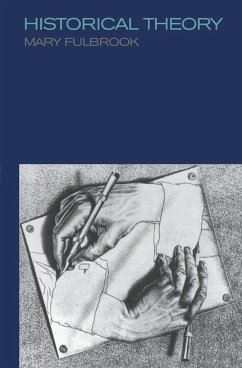
This is what Mary Fulbrook (chapter 3 of her 20o2 book, see photo) says about implicit paradigms in history:
A-theoretical historians, if provoked sufficiently, may be brought to enunciate the view that Theory Is Not History and historians should get on with The Real Job of Doing History. Now for the bad news.
Even those who have no interest in theory are actually operating with implicit paradigms. In fact, the rest of this book is devoted to unpicking the various elements involved even in implicit paradigms. We have just introduced some of these elements, which, if unpacked a little more, include: the constitution and categorisation of "facts"; the selection of which "facts" to include and exclude; notions about the relationship among elements; the significance and weighting given to each element; the constitution of what might be called a Geschichtsbild, the historical picture of the whole, and the emplotment, the tale told about the combination of selected elements (sometimes called the metanarrative); and the general evaluation and emotive colouring given to the final product, the representation of history (including the use of language through which to write and represent selected aspects and interpretations of the past). […]
For example, how should one approch characterization and explanation of the English Civil War —or English Revolution, as Marxit historians (used to) like to call it? […]
[I]t is important to note the fact that any historical explanation entails choices about selection and explanation, whether or not it is considered by its proponents to be theoretical. And what satisfies one historian's curiosity (analysis of key meetings, the specific motives or actions of particular individuals) may seem just a matter of irritating or even trivial detail from the perspective of another historian. (pp.35-37)

(By the way, the present writer never doubted the fact that it WAS a Revolution. Apparently, my History teachers were also influenced by Marxist paradigms but, helas, did not make me aware of them.)

Let us then speak about methodology, all the more because it is something were genuine discussions are really possible (unlike in the case of minor details of one's work).

I already addressed this issue here and D. Wujastyk did it in his comment on this post.

Sunday, August 21, 2011

Should we just write in English?

English native speakers have the undoubtful advantage of having the chance to write in their own language while writing in a sort of lingua franca, understood by the whole Academia. But what about the rest of us?

  • Should we just write in English —since, after all, we address a public which is supposed to read English well enough?
  • Should we write in English while addressing an academic public and in our mother-tongue while addressing a more general one, one which could still need introductory works on, e.g., the Bhagavadgītā or the Yoga system?
  • Should we write in English our essays and in our mother-tongue our translations? (This seems to be the policy adopted in Vienna by E. Steinkellner, H. Krasser, their students and colleagues.)

In favour of the idea of writing in English speak many compelling reasons, one for all is the wider accessability of essays written in English. However, against it, I can find at least two interesting points:
  1. 1. It is hardly the case that one's English is good enough to master all nuances of the English language. Translating in English, hence, entails translating in a less-refined way.
  2. 2. We all work on Indian topics, because (among other things) we are convinced of the importance of keeping alive the lore of Indian thought, safeguarding its différence within the process of homologation of thought. Doing it through a single medium —does not this entail a contradiction?

Which languages do readers use while blogging/writing/translating? Which different readerships do you address? And, if you are an English Native Speaker, how do you feel about "our" use of English?

You might read here and here some interesting comments on translating from Sanskrit into English (especially if one has not English as one's native tongue).

Sunday, August 14, 2011

Applied (Indian) Philosophy

Out of the last weeks' news: 1. debate about the Danish terrorist Breivik: how could one defend one's society from hatred? 2. the number of people depending on pain-killers increases and pain-killers alone are often not enough to sedate pain. They would also need a psychological assistance.
From one point of view, it is way to easy to see that an increase in the general level of self-awareness, critical thought and intellectual resources in the society would be badly needed. As explained in the Kāmasūtra, even those who cannot read benefit of the general level of culture, because society as a whole so to say oozes with śāstra.
I am absolutely in favour of financing pharmaceutical research or computer sciences, but I wonder whether humanistic studies are really that useless. After all, does not society itself benefit of a general increase in its culture? Of course, scientific culture should also increase. But are we really sure that only the latter deserves funding? It should also be taken into account that humanistic studies are in comparison much cheaper. One does not needs labs, rats, expensive materials or the like. Why do not governments feel it is a good investment to have more people studying, e.g., Indian philosophy and resisting racism, or studying the Western philosophical bases of psychoanalysis and understanding how much of pain is culturally dependent?
But this leads me to a further question: how much do humanities scholars contribute to the misunderstanding of their disciplines as useless? Should we just stop caring about footnotes and bibliography and focus on the essential? Or is careful reading itself essential?

What do readers think? And what do they actively do?

Monday, August 8, 2011

Why using poetry to convey a theological or philosophical content?

There seem to be three ways a thinker could use (also) poetry:

  1. 1. just as a formal device (e.g., for mnemotechnical purposes): Dharmakīrti, Kumārila, Bhartṛhari…
  2. 2. as a way to convey in a dramatic way a philosophical content: Jayanta's Āgamaḍambara, Utpaladeva's stotras… In this case, the full-fledged form of one's reasoning will still be found in one's philosophical works.
  3. 3. insofar as poetry and narrative allow one to integrate time within one discourse, to go beyond the logic of the principle of non contradiction, etc., : Vedānta Deśika, many Yogācāra and Mahāyāna Sūtras. In this case, one's narrative texts will be closer to one's ultimate purpose.

Do readers see further cases?

On Philosophy and Poetry and o Vedānta Deśika, see (among many other posts), here (please note also Vidya's comment). On Jayanta, see here. On Utpaladeva, see here. On a Mahāyāna Sūtra and its philosophical significance, see here.

Saturday, August 6, 2011

Coffee Break Conference — 2

As last year, we organized a new edition of the Coffee Break Conference. The title means that the whole conference aims to be relaxed and stimulating, like the discussions taking place during the coffee breaks (and never during the actual conferences).
For further details on the concept, please check our web-site, http://asiatica.wikispaces.com/


The Study of South Asia: between Antiquity and Modernity: Parallels and Comparisons.

The Coffee Break Conference — 2

(8-10 September 2011)


Where: Institute of Oriental Studies, Caserma Sani, via Principe Amedeo 182b (Underground “Vittorio"), Rome

1

1.1 Language as a Way of Salvation

Thursday the 8th, 8.30-13 sine tempore

chair: Marco Ferrante

• 8.30-8.35, Camillo Formigatti and Elena Mucciarelli, General Introduction.

• 8.35-8.40, Marco Ferrante, Introduction to the Panel.

• 8.40-9.20, Paolo Visigalli (University of Cambridge), How can I get a cow just by saying “cow"? an exploration into the power of language in ancient India.

• 9.20-10, Enrico Giulia, The Japanese Polyglots of Salvation: Miwa-ryū and its multilinguistic approach.

• 10-10.40, Marco Ferrante, Language, Salvation and their Relation: the soteriological goal according to the ancient Indian grammarians.

• 10.40-11, coffee break

• 11-11.40, Marco Lauri, Three ways to happiness. Arabic language and its paths to salvation.

• 11.40-12.20, Priya Darshini Swamy (University of Leiden), One Language is Not Enough: The Use of Sanskrit Among Hindus in Amsterdam.

• 12.20-13, Roberta Amato (Archivio di Stato di Venezia), Language as a sign of the times in Timor-Leste. The perception of the Portuguese language as salvation between politics and religious belief.

13-14.15: Lunch

1.2 The Development Question in South Asia: Policies and Processes

Thursday the 8th pomeriggio 14.15-17.20

chair: Matilde Adduci

• 14.15-14.20, Paola Cagna, Introduction to the Panel.

• 14.20-15, Daniela Bevilacqua, Divine Enterprise, the intime relationship between new Hindu religious organisations, Hindu nationalism and power élites.

• 15-15.40, Paola Cagna, The Self-Help groups movement between poverty alleviation and women’s empowerment: a case study from South India.

• 15.40-16, coffee break

• 16-16.40, Valentina Prosperi, Casual migrant workers in the construction industry in India. Gender dimension.

• 16.40-17.20, Simona Lanzoni, Women, empowerment and microcredit.

17.20-17.30: coffee break

1.3 Round-table on History and Historiography

Universalist theories in past, present and research. Or: How autopoietic was primitive communism?

Thursday the 8th, 17.30-19.30

chair: Mark Schneider (University of Hamburg)

2

2.1 “Indigenous" grammars

Friday the 9th 8.30-13

chair: Giovanni Ciotti (University of Cambridge)

• 8.30-8.35, Giovanni Ciotti Introduction to the Panel.

• 8.35-9.25, Philomen Probert (University of Oxford), Underlying forms and derivations in ancient Greek theory of prosody.

• 9.20-10.15, Maria Piera Candotti (University of Lausanne) and Tiziana Pontillo (University of Cagliari), Linguistic layers and their role in structuring Pāṇini's grammar.

• 10.15-10.30, coffee break

• 10.30-11.20, Christian Pallone, Japanese grammatical traditions.

• 11.20-12.10, Stefano Seminara (Pontificio Istituto Biblico, Rome), Sumerian grammatical traditions.

• 12.10-13, Carlo Vessella, Greek grammatical traditions.

13-14.15: Lunch

• 14.15-15, Artemij Keidan, The Syntax of the simple sentence.

2.2 Round table on Borrowing representational devices across language speculation

What happens when representational devices developed by a tradition to describe a language A are employed to describe a language B?

Friday the 9th 15-17

chair: Giovanni Ciotti

• 15-15.30, Introductory speech, Luca Alfieri, A Contribution to the History of the Concept of Root.

• 15.30-17, Open Discussion

17-17.15, coffee break

2.3 Narratives in South Asian philosophical texts

Friday the 9th 17.15-19.30

chair: Daniele Cuneo

• 17.15-17.20, Daniele Cuneo, Introduction to the Panel.

• 17.20-18.10, Robert Leach (University of Edinburgh), Textual Deference: Philosophy in the Spandapradīpikā.

• 18.10-19, Kate Wharton (Research Assistant to the Revd Canon Guy Wilkinson), The Teacher as Mother of Midwife? A Comparison of Brahmanical and Socratic Methods of Education.

• 19-19.30, Open Discussion

3

3.1 The relevance of texts for the study of art

Saturday the 10th 8.30-11.20 chair: Elisa Ganser

• 8.30-8.35, Elisa Ganser, Introduction to the Panel.

• 8.35-9.25, Ciro Lo Muzio, Written sources versus material record: some views on a thorny issue.

• 9.25-10.15, Felix Otter (University of Heidelberg), Vastuvidyā between text and practice: Some considerations.

• 10.15-10.30, coffee break

• 10.30-11.20, Anna Tosato (University of Mysore), The Use of Traditional Texts in the Interpretation of Dance Sculptures (Nāṭyaśāstra-s, Śilpaśāstra-s and Vāstusūtra Upaniṣad).

11.20-11.35, coffee break

3.2 Round Table on Present Results and Further Goals

Saturday the 10th, 11.35-12.35

chair: Elena Mucciarelli and Cristina Bignami

For further info, abstracts and additional bibliography:

http://asiatica.wikispaces.com


If you feel the project appealing, please consider donating here.

Monday, August 1, 2011

Nothing is self-evident


There are some stylistic devices I just cannot stand. One of them is to label something as "self-evident" or obvious. If something is that easy to demonstrate, take the time to do it —it will not take long. If you do not do it, it is likely that you just would not know how, and in this case stating that no demonstration is needed does not strengthen your argument. Unless, of course, one aims at creating an interesting delusion rather than convincing someone in an epistemologically sound way.
Further, if one is genuinely convinced that a given statement is self-evident, she might herself be under a similar delusion. Everyone used to believe that the earth was flat and that this was "self-evident". To assume an unreflected statement as self-evident is not appealing to common sense, it is just using a faulty method.
It all becomes even more ironical if what is said to be obvious is, in fact, a controversial issue!

Do readers have words which just drive them crazy?

On the risks of denying a methodology, see here.
Licenza Creative Commons
Quest' opera è distribuita con licenza Creative Commons Attribuzione - Non commerciale - Non opere derivate 2.5 Italia.